
2026-08-20 · Carlos Mendoza
Managing Rainy Season Water Issues in St. Petersburg Yards and Foundations
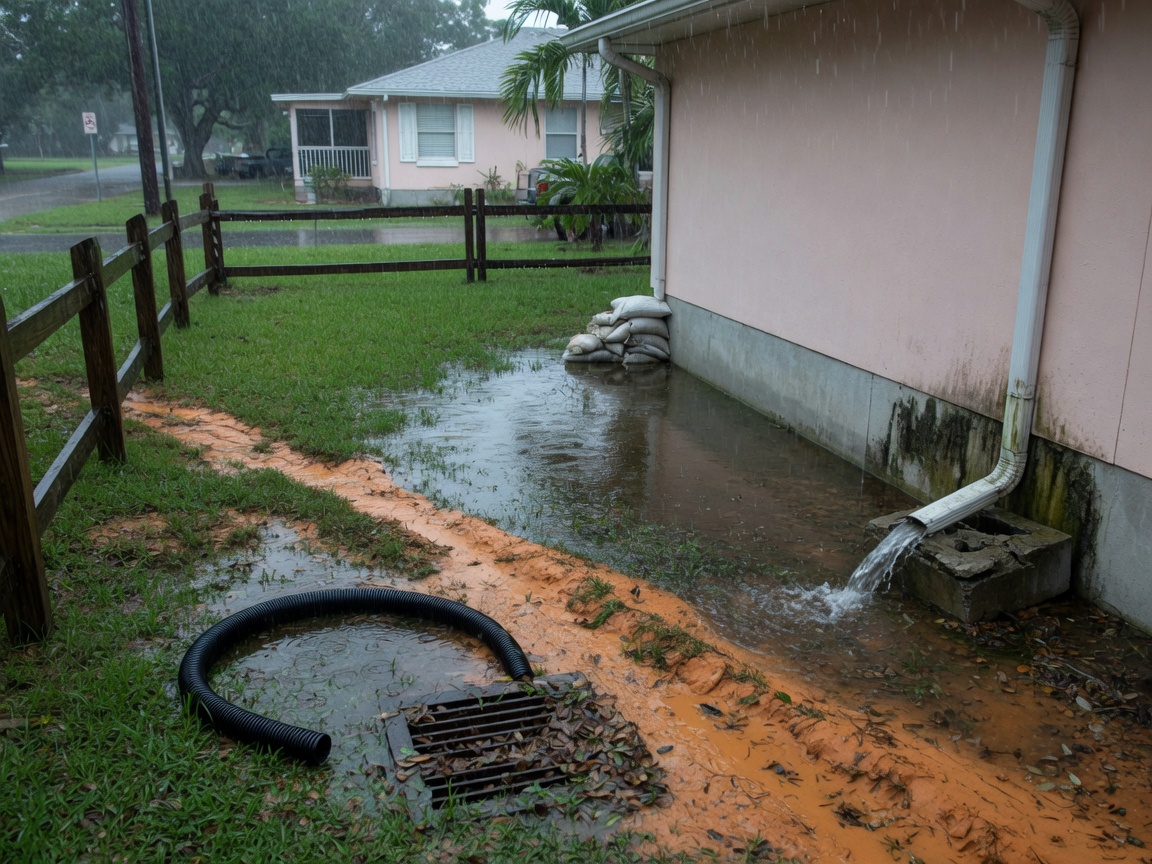
St. Petersburg homeowners see the most yard and foundation water problems between June and September when daily thunderstorms drop 2–4 inches in a single afternoon. Sandy Pinellas County soils drain quickly yet erode around slab edges and crawl spaces common in 1950s–1970s homes found in Gulfport and Kenneth City. Directing runoff away from structures within 48 hours prevents moisture from reaching footings and reduces the chance of long-term settlement.
Recognizing Drainage Patterns Around Local Homes
Many St. Petersburg yards slope toward the house because original builders graded for quick lawn drying rather than long-term foundation protection. In Pinellas Park and Largo, older concrete swales often clog with oak leaves and sand during heavy summer storms. Walk the perimeter after a 1-inch rain and note any puddles that remain longer than four hours; these spots indicate where downspout extensions or regrading will make the biggest difference. Check window wells and AC condensate lines, which frequently empty too close to the slab and keep soil saturated for days.
Protecting Foundations from Seasonal Saturation
Sandy soil around older St. Petersburg slabs can wash out 4–6 inches beneath the edge during repeated downpours, leaving a void that invites cracking. In neighborhoods near the bay such as Gulfport, high groundwater tables rise during king tides and combine with rainfall to push moisture through expansion joints. Homeowners should maintain at least 6 inches of clearance between soil and siding, and ensure gutters empty 5–6 feet from the foundation. Adding a 6-mil vapor barrier in crawl spaces cuts humidity that otherwise wicks upward through subflooring.
Practical Yard and Drainage Improvements
Regrading a typical 20-by-30-foot side yard costs $800–$1,800 and usually solves chronic pooling near the garage. Installing a 4-inch French drain with cleanouts every 20 feet handles the 3–5 inches of rain that falls in a typical August event. Homeowners in Seminole and Belleair often combine the drain with a pop-up emitter that releases water into the street rather than the neighbor’s yard. Mulch beds should slope away from the house at 1 inch per foot for the first 6 feet to keep splash-back off stucco walls.
When Professional Extraction Becomes Necessary
If water reaches the slab edge or enters a crawl space after a storm, structural drying services prevent hidden mold growth behind baseboards. Crews use moisture meters to confirm wall cavities drop below 12 percent before closing them. For properties that flood repeatedly near the shore, flood damage cleanup teams document saturation levels for insurance while removing affected insulation and drywall. Linking these steps to the seasonal calendar helps residents act before the next front arrives.
Continuing Protection and Monitoring
After initial fixes, check yard drainage monthly during rainy season and clear debris from French drain grates. Readers dealing with shoreline properties can review additional groundwater risks in the post on groundwater and king tide flooding risks along St. Petersburg shorelines. When storms exceed normal patterns, storm damage restoration crews at Best Standard Restoration, 4604 49th Street N, Suite 1614, St. Petersburg, FL 33709 remain available around the clock to extract water before it reaches living spaces.