
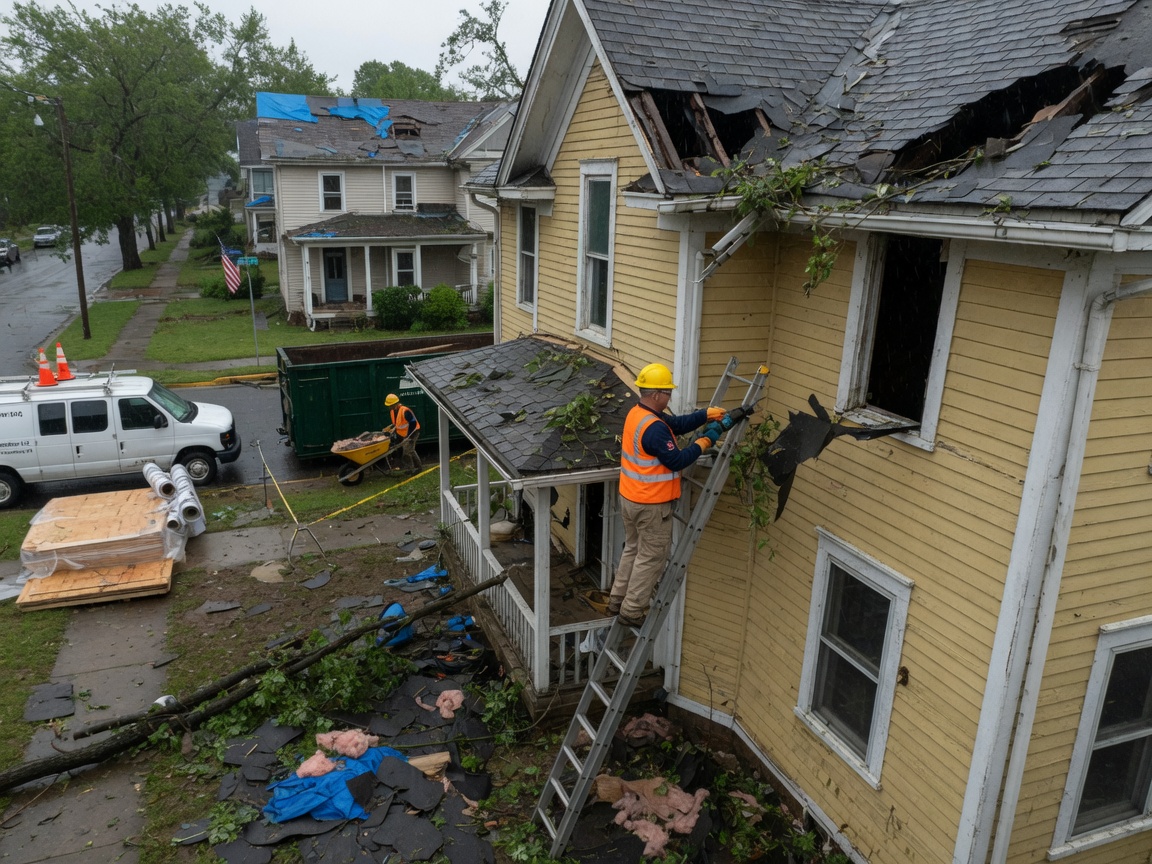
St. Petersburg sees frequent tropical storms that push water through older roof penetrations and around window frames in neighborhoods like Old Northeast and Kenwood. Homes built before 1970 often have plaster over lath or early drywall that absorbs and holds moisture far longer than newer materials, so extraction alone rarely finishes the job. Crews must pull baseboards and drill weep holes in exterior walls to reach trapped water before mold sets in during the humid summer months.
Wind-driven rain from the Gulf commonly enters through soffits and gable vents in single-story bungalows common near 49th Street N. When that happens, insulation in attic spaces and exterior wall cavities must be removed and replaced rather than dried in place. Failure to do so leaves hidden moisture that later causes ceiling stains and warped hardwood floors in the living areas below.
Tampa Bay tidal surge during stronger events can push saltwater into crawl spaces along the waterfront edges of St. Petersburg. Salt crystals left behind accelerate corrosion on metal straps and wiring, so restoration includes rinsing with fresh water followed by corrosion inhibitors before any drying equipment is placed.
City permitting requirements in Pinellas County call for documentation of structural drying when more than 25 percent of a wall or ceiling is affected. Skipping this step delays insurance approvals and can trigger re-inspection fees for homeowners.
Technician insight
In St. Petersburg the thing that catches most people out with storm damage is how quickly wind-driven rain soaks the plaster walls in 1950s bungalows near Tyrone or downtown; once the paper facing gets wet it delaminates from the lath and you have to open the wall even if it looks dry on the surface.
Kenwood Bungalow After Tropical Storm
Wind-driven rain entered through a lifted shingle row and traveled down interior walls into the living room. We found saturated plaster and insulation behind baseboards that standard fans would never reach. Extraction, wall drying, and selective drywall replacement restored the home without full gutting.
Storm Damage Restoration Services We Offer
✓Roof Leak and Attic Drying
Locate and seal storm-created roof penetrations then remove wet insulation and dry attic spaces in St. Petersburg homes before ceiling damage spreads.
✓Wind-Driven Rain Intrusion Repair
Extract water forced through windows, doors, and siding then treat affected interior walls to prevent hidden mold growth common after Gulf storms.
✓Crawl Space Flood Restoration
Remove saltwater from under-house spaces, rinse framing, and install dehumidification to protect joists and wiring in older St. Petersburg properties.
✓Emergency Board-Up and Tarping
Secure openings created by wind or fallen limbs with plywood and temporary roof covers to stop further rain entry until permanent repairs begin.
✓Structural Drying After Tropical Storms
Use industrial air movers and dehumidifiers sized for Florida humidity levels to dry wall cavities and subfloors without demolition where possible.
Storm Damage Restoration Cost in Petersburg, FL
| Service | Typical Range | What Affects It |
|---|---|---|
| Initial Assessment and Moisture Mapping | $150–$350 | Larger homes or multi-level properties increase time on site. |
| Emergency Tarping or Board-Up | $400–$900 | Depends on roof pitch and number of openings. |
| Water Extraction and Drying (per affected room) | $800–$2,200 | Crawl space or attic work adds equipment and labor. |
| Insulation and Drywall Removal | $1.50–$3.50 per sq ft | Price rises when plaster or multiple layers are present. |
Ranges are typical for Petersburg, FL and confirmed with an exact written quote before any work starts.
How it works
- 1
On-Site Assessment
Technician inspects roof, walls, and crawl space to map water migration paths typical in St. Petersburg construction.
- 2
Water Extraction
Remove standing water from interiors and under-house areas before humidity rises further.
- 3
Moisture Mapping and Containment
Document affected materials and set up containment to protect unaffected rooms.
- 4
Drying and Monitoring
Run equipment daily and recheck moisture levels until readings match unaffected areas.
- 5
Final Restoration
Replace removed materials and return the home to pre-storm condition.
Pricing
Pricing varies by storm intensity, square footage affected, and whether crawl spaces or attics require access. Upfront written estimates provided before work begins.