
2026-08-20 · Carlos Mendoza
How to Spot Hidden Water Damage After Tropical Storms
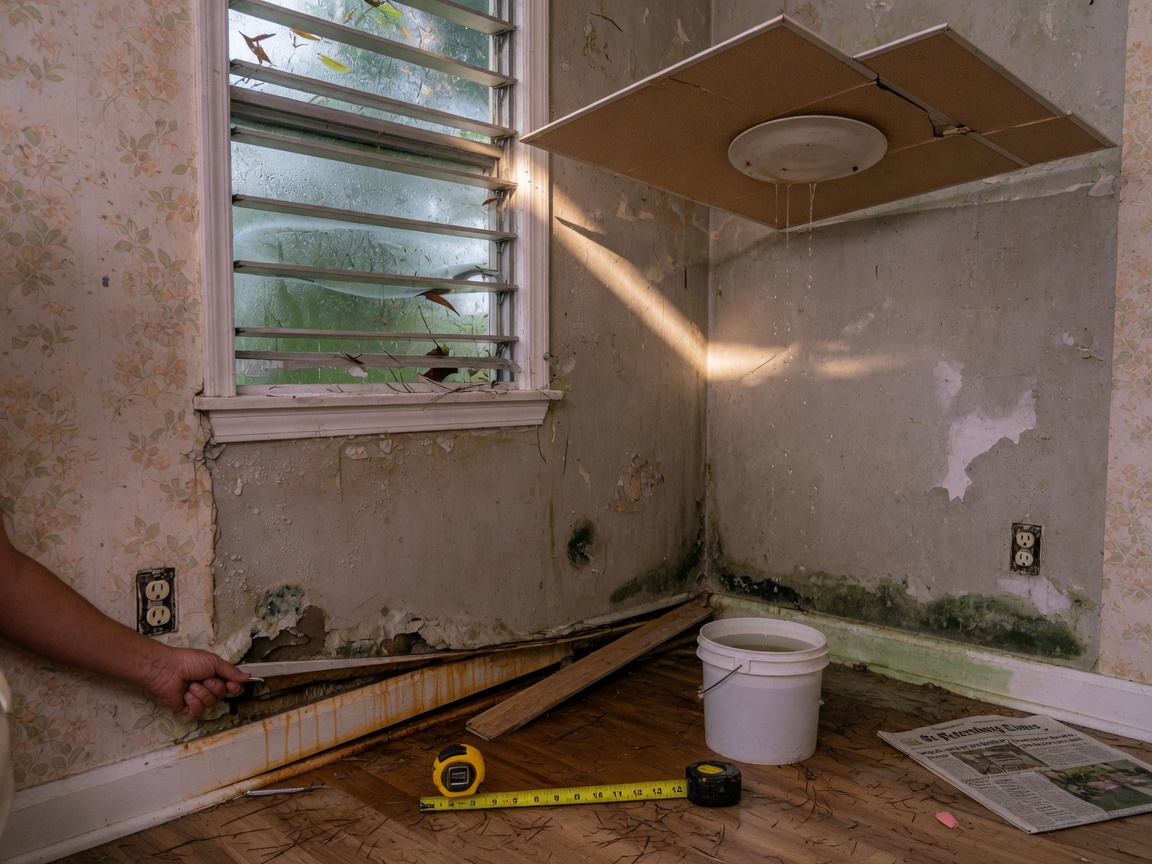
Hidden water damage after tropical storms in St. Petersburg often appears first as faint ceiling stains, musty smells near baseboards, or slight floor cupping within 48 to 72 hours of heavy rainfall. These clues show up because storms push water under roof edges and through older flashing in Pinellas County homes built before 1980.
Inspecting Ceilings and Interior Walls
Start in rooms on the north and east sides of the house where prevailing winds drive rain during tropical systems. Look for yellow-brown rings on drywall that grow darker after each storm season. Press gently on suspect areas; soft spots indicate water has reached the paper facing. In Gulfport and Kenneth City neighborhoods, many 1960s ranch homes have popcorn ceilings that hide moisture until it migrates downward. Check around light fixtures and HVAC registers where condensation mixes with storm water. If discoloration appears, document the size and location before it spreads further into insulation.
Checking Attics and Roof Deck Areas
Tropical storm winds often lift shingles along the lower courses, allowing water to pool on the decking. Climb into the attic during daylight and scan the underside of the roof sheathing for dark streaks or wet insulation batts. Pay special attention near plumbing vents and skylights common in Largo and Seminole homes. A moisture meter reading above 18 percent on plywood signals active intrusion. This step connects directly to checking for water damage in attics after roof leaks because the same entry points repeat after every named storm. Remove a small section of insulation if needed to trace the water path back to the roof edge.
Examining Flooring and Slab Foundations
Concrete slabs in St. Petersburg homes built on fill dirt absorb moisture when storm drains overflow. Walk barefoot across tile or vinyl and feel for cool spots that indicate water beneath the surface. Lift a corner of carpet in closets or under appliances to check for rust on tack strips or dark lines along the pad. In Pinellas Park and Safety Harbor, older homes with terrazzo floors show hairline cracks that widen after repeated flooding. These signs often appear weeks later when humidity drops and the slab begins to dry unevenly.
Monitoring for Secondary Mold and Odors
Once moisture sits for more than five days, musty smells develop behind baseboards and inside wall cavities. Use a flashlight to look for fuzzy growth on drywall paper or around window sills after the storm passes. In Clearwater and Dunedin, high water tables mean crawl spaces stay damp longer, feeding mold on floor joists. Track any new allergy symptoms in family members as an early warning. Addressing these issues quickly leads homeowners to water damage restoration before the problem reaches living spaces.
When to Schedule Professional Assessment
If you find two or more of the signs above after a tropical storm, contact a team familiar with Pinellas County construction. Storm damage restoration crews know how to map moisture behind stucco and through balloon-framed walls without unnecessary demolition. They also understand how what affects water damage restoration costs in Pinellas County changes when hidden damage reaches multiple rooms. Best Standard Restoration operates 24 hours from 4604 49th Street N, Suite 1614, St. Petersburg, FL 33709 and responds across Gulfport, Largo, and Belleair after every storm event.