
2026-08-20 · Carlos Mendoza
What Affects Water Damage Restoration Costs in Pinellas County
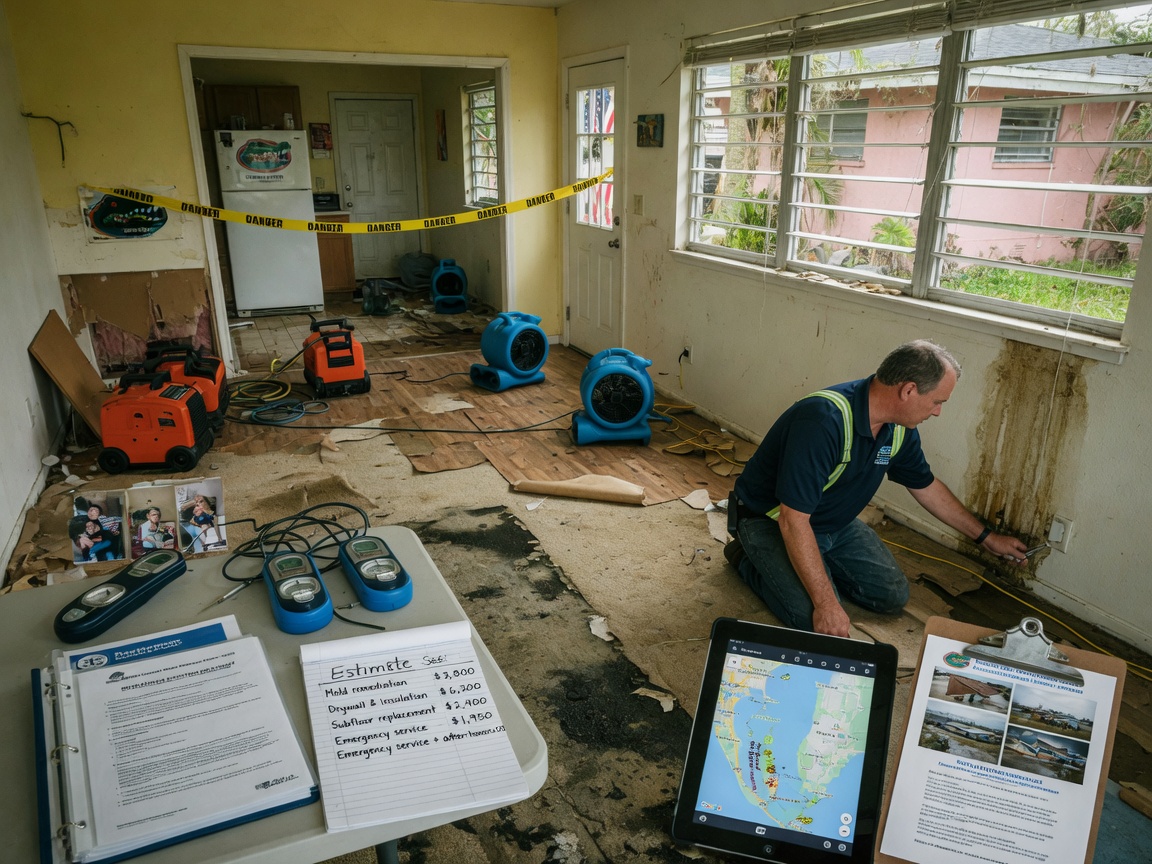
Water damage restoration costs in Pinellas County often fall between $3,200 and $8,500 for typical residential jobs, though the final figure hinges on home construction era, water category, and how quickly crews reach the site. Properties in St. Petersburg neighborhoods built before 1970 frequently require more demolition because plaster and lath walls absorb moisture differently than modern drywall. High local humidity slows evaporation rates, extending drying times and equipment rental periods. Storm surge or appliance leaks near the coast add variables that crews must address on site.
Housing Stock Age and Materials in St. Petersburg
Many homes in Pinellas County date to the 1950s through 1970s, with concrete block construction and original plumbing that can fail without warning. When pipes burst in these structures, water travels through slab foundations and into subfloor cavities, requiring moisture mapping that extends beyond visible wet areas. Crews often remove baseboards and drill weep holes to reach trapped moisture in block walls, adding labor hours compared with newer framed homes in Gulfport or Kenneth City. Older electrical systems also raise safety checks before drying equipment is placed, increasing the overall scope.
Seasonal Weather and Humidity Effects
Pinellas County receives its heaviest rainfall from June through September, with afternoon storms delivering several inches in hours. Once water enters a home, Florida humidity above 70 percent prevents natural drying and promotes secondary mold growth within 48 hours. Technicians therefore deploy more dehumidifiers and air movers than in drier climates, raising daily equipment charges. Properties near the waterfront in areas like Gulfport face added risk from tidal flooding that carries sediment into carpets and HVAC systems.
Water Category and Contamination Factors
Clean water from supply lines costs less to handle than gray or black water from sewage backups or storm flooding common after hurricanes. In Pinellas County, Category 3 water often requires full removal of affected porous materials and antimicrobial application to meet health standards. Crews document moisture readings at multiple depths in flooring and walls to confirm when levels return to the 10-12 percent range typical for local building materials. This documentation protects both the property owner and the restoration team.
Response Time and Equipment Needs
Calling Emergency Disaster Restoration Services within the first hour limits how far water migrates through a structure. Delayed response in humid conditions forces longer use of industrial drying equipment, directly raising the bill. Structural Drying Services crews track progress with daily moisture logs so homeowners see exactly when conditions stabilize. Faster extraction also reduces the chance that minor leaks turn into full Water Damage Restoration projects.
Practical Steps Homeowners Can Take
Document the source and extent of water with photos before any cleanup begins. Shut off water at the main if safe to do so, and move furniture away from wet zones to prevent further saturation. Homeowners in Pinellas Park or Largo benefit from reviewing Preventing Mold After Water Intrusion in Florida Humidity to understand early interventions that keep costs contained. Checking the Typical Timeline for Water Extraction and Drying in Local Conditions helps set realistic expectations for how many days equipment may remain on site.