
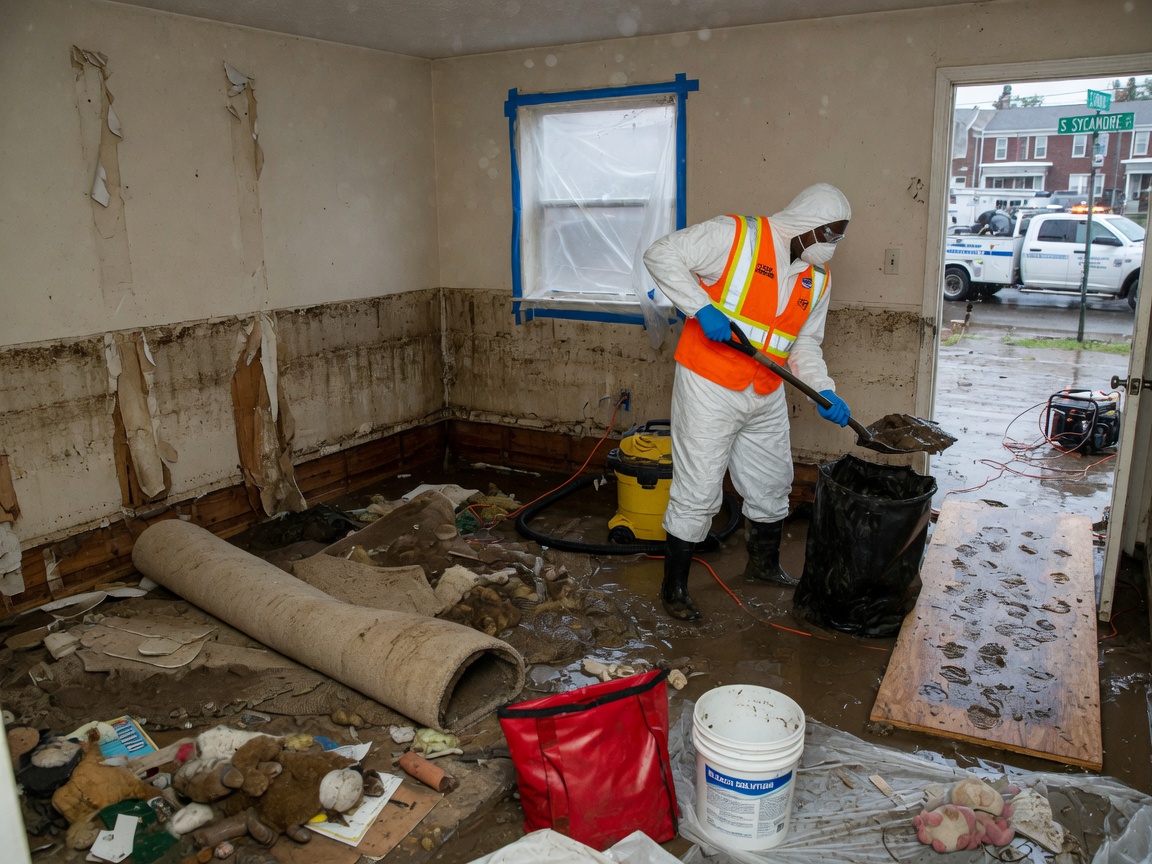
St. Petersburg's older housing stock in neighborhoods like Kenwood and Old Northeast often features crawlspaces and pier-and-beam construction that trap water after summer thunderstorms or tropical systems. Once floodwater enters these voids it migrates into subflooring and wall cavities, creating hidden moisture that standard fans miss. Technicians must pull baseboards, drill weep holes, and run commercial dehumidifiers for days to prevent mold in the high-humidity Pinellas County climate.
Storm surge from Tampa Bay can push saltwater into ground-level homes along the waterfront and in areas such as Snell Isle. Salt residues corrode wiring and HVAC components long after visible water is gone, so thorough rinsing and moisture mapping with thermal cameras are required before any reconstruction begins. Homeowners who skip this step frequently face repeated electrical issues months later.
Local building codes in St. Petersburg require permits for any structural drying that affects load-bearing elements, and insurance carriers expect documented daily moisture logs. Skipping these steps can delay claims or force rework when inspectors visit. Crews document every reading and photograph each drying zone to keep projects moving without surprises.
Technician insight
In St. Petersburg the thing that catches most people out with Flood Damage Cleanup is how quickly water travels through the sandy soil and into the unsealed crawlspaces of 1950s-1970s homes in Old Northeast and Kenwood after a single heavy afternoon storm; homeowners often stop at visible puddles and miss the moisture that later ruins subfloors.
Crawlspace Flooding After Summer Storm in Kenwood
Heavy rain overwhelmed drainage around a 1962 Kenwood home and water entered the crawlspace. Crews found saturated insulation and elevated moisture in the subfloor. Water was extracted, the space dried with commercial equipment, and affected insulation was replaced before mold could form.
Flood Damage Cleanup Services We Offer
✓Emergency Water Extraction
Rapid removal of standing floodwater from living spaces and crawlspaces using truck-mounted pumps to limit further absorption into flooring and walls.
✓Crawlspace Flood Drying
Targeted drying of pier-and-beam homes common in Kenwood and Historic Kenwood, including insulation removal and vapor barrier replacement after water intrusion.
✓Saltwater Contamination Cleanup
Rinsing and neutralizing salt deposits left by Tampa Bay storm surges to protect wiring, HVAC systems, and metal fixtures in waterfront properties.
✓Post-Flood Mold Containment
Immediate containment and HEPA air filtration in moisture-damaged rooms to stop mold growth before full structural drying is complete.
✓Subfloor Moisture Mapping
Thermal imaging and probe readings to locate hidden water in plywood and particleboard floors typical of 1960s-1980s St. Petersburg construction.
Flood Damage Cleanup Cost in Petersburg, FL
| Service | Typical Range | What Affects It |
|---|---|---|
| Initial Assessment | Free | Includes moisture mapping for St. Petersburg properties |
| Water Extraction | $800–$2,200 | Varies with depth and square footage in crawlspaces |
| Equipment Drying (per day) | $250–$450 | Number of days required after heavy rain events |
| Saltwater Rinse and Neutralization | $600–$1,400 | Required for properties near Tampa Bay |
Ranges are typical for Petersburg, FL and confirmed with an exact written quote before any work starts.
How it works
- 1
On-Site Assessment
Technician arrives within hours, inspects affected rooms and crawlspaces, and records moisture levels in St. Petersburg homes.
- 2
Water Extraction
Standing water is pumped out and salvageable contents are moved to prevent secondary damage.
- 3
Drying and Dehumidification
Air movers and dehumidifiers run until readings meet industry dry standards, with daily logs kept for insurance.
- 4
Final Inspection and Handover
All surfaces are checked again, equipment is removed, and the homeowner receives a moisture report.
Pricing
Most flood jobs start with a free assessment; final cost depends on water volume, affected square footage, and whether saltwater or sewage is present.