
2026-08-20 · Carlos Mendoza
Preventing Mold After Water Intrusion in Florida Humidity
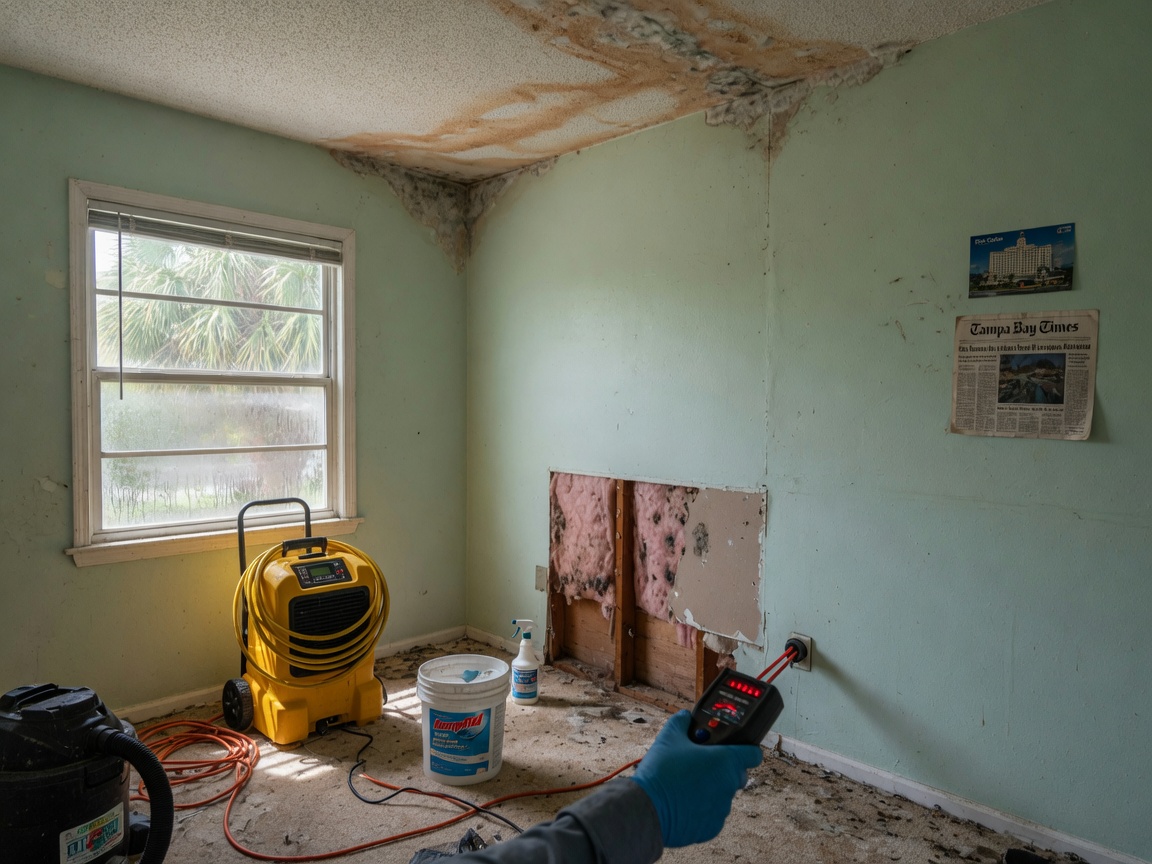
Mold can begin to grow within 24 to 48 hours after water intrusion when relative humidity stays above 60 percent, which is common across St. Petersburg neighborhoods year-round. Acting inside that window prevents spores from settling into drywall, subfloors, and insulation typical of the area's older housing stock. Local conditions such as frequent afternoon storms and high groundwater levels in low-lying blocks near downtown make the timeline even tighter.
The 24-48 Hour Window in St. Petersburg Humidity
Florida humidity rarely drops below 65 percent even at night, so any standing water or damp materials quickly reach the moisture content mold needs. Homes built before 1980 in areas like Gulfport and Kenneth City often have plaster walls and crawl spaces that trap moisture longer than newer construction. Once humidity inside a wall cavity exceeds 80 percent for more than a day, visible colonies can appear on baseboards within three to five days. Removing bulk water the same day and running commercial air movers for at least 72 hours cuts that risk sharply.
Drying Methods That Work in Pinellas County Conditions
Dehumidifiers sized for 50-70 pint daily extraction handle the constant moisture load better than residential units during summer. Direct airflow across wet carpet pads and under cabinets for 48 to 72 hours, checking moisture readings every 12 hours until they fall below 15 percent. In crawl spaces common to Pinellas Park and Largo, place equipment on vapor barriers and seal vents temporarily to force drier air through the space. These steps match the realities of sandy soil that drains slowly after heavy rain.
Homeowners in low-lying neighborhoods near downtown St. Petersburg face repeated saturation of yard soil that wicks into foundations. Managing Rainy Season Water Issues in St. Petersburg Yards and Foundations explains how to grade soil and add French drains before the next storm season. After any intrusion, focus first on hidden cavities behind tile and under vinyl rather than visible puddles alone.
Monitoring and Follow-Up Checks
Use a pin-type moisture meter on drywall and joists at multiple heights every day for a week after the initial dry-out. Record readings in a simple log so patterns show up before musty odors develop. In older St. Petersburg homes, check behind kitchen and bathroom cabinets where pipes run through exterior walls. If any reading stays above 18 percent after four days of drying, hidden saturation remains and requires further demolition.
When water reaches living spaces after storms, Handling Flooding in Low-Lying Neighborhoods Near Downtown St. Petersburg outlines safe entry steps and documentation that supports insurance claims. Professional structural drying services bring the equipment and monitoring that homeowners cannot replicate with box fans.
Knowing When Professional Mold Remediation Is Needed
If discoloration appears on drywall or a persistent earthy smell develops within five days, stop DIY drying and contact a remediation team. Mold remediation crews contain the space, remove affected materials, and apply antimicrobials that reach inside cavities. Delaying this step lets spores spread through HVAC systems common in ranch-style homes throughout Seminole and Clearwater. Early professional involvement keeps small water events from becoming full-room removals.
Best Standard Restoration operates 24 hours a day from 4604 49th Street N, Suite 1614, St. Petersburg, FL 33709 and responds to water damage restoration calls across the county. Their crews arrive with moisture meters and drying plans sized for the exact construction found in each neighborhood.