
2026-08-20 · Carlos Mendoza
Typical Timeline for Water Extraction and Drying in Local Conditions
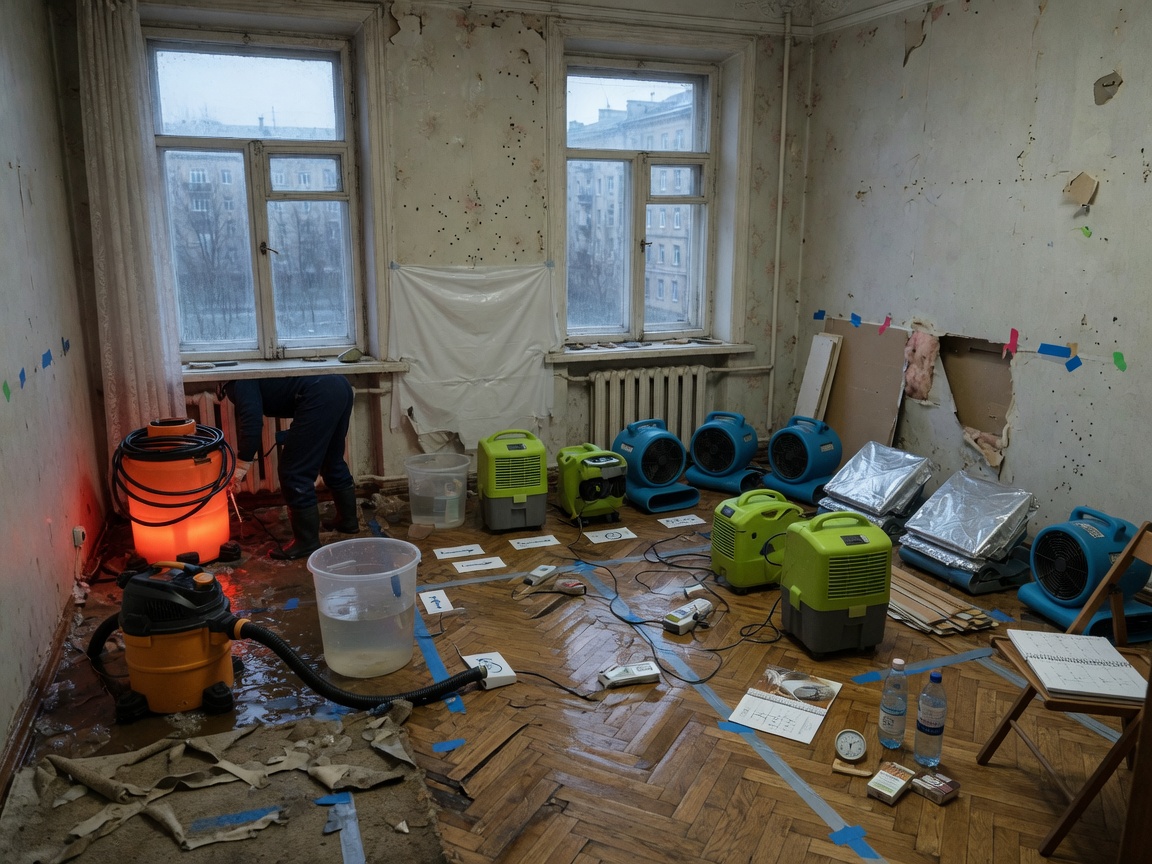
In St. Petersburg's humid subtropical climate, water extraction typically finishes within 24 to 72 hours while structural drying often requires 5 to 14 days once equipment is running. These ranges reflect the high moisture load in Pinellas County air and the age of many homes near downtown and in Gulfport.
Initial Water Extraction Phase
Technicians arrive within hours of the call and begin removing standing water with truck-mounted pumps and portable extractors. In mid-century St. Petersburg homes, slab-on-grade construction and older plumbing runs often trap water under tile or carpet padding, so crews pull baseboards and drill weep holes to reach hidden pockets. Extraction continues until moisture readings drop below 15 percent on subfloors. The process rarely exceeds three days unless flooding reaches multiple rooms or originates from a handling flooding in low-lying neighborhoods near downtown St. Petersburg. Seasonal afternoon thunderstorms can refill low spots during extraction, requiring repeated passes.
Drying Equipment Setup and Daily Monitoring
Once bulk water is gone, crews place air movers, dehumidifiers, and moisture meters throughout affected zones. In the high-humidity conditions typical from May through October, units run 24 hours a day and are checked twice daily for temperature, relative humidity, and wood moisture content. Technicians adjust placement as readings change because plaster walls in Kenneth City and Pinellas Park homes release moisture slowly. Daily logs track progress so homeowners see exactly when levels stabilize. This phase usually overlaps the final extraction work and continues until interior humidity matches outdoor ambient levels.
How Local Climate Extends Drying Times
St. Petersburg summers keep outdoor relative humidity above 70 percent for weeks, slowing evaporation even with professional equipment. Low-lying neighborhoods near downtown hold water longer because the water table sits close to the surface. Mid-century homes often lack modern vapor barriers, so moisture migrates into framing and insulation. Winter cold fronts bring drier air that speeds drying by 20 to 30 percent compared with summer storms. Crews therefore schedule longer equipment runtime during wet-season calls and may add extra dehumidifiers when forecasts show extended rain.
When Additional Steps Become Necessary
If moisture readings remain elevated after seven days, crews open wall cavities or remove sections of flooring to expose hidden saturation. In older St. Petersburg properties this step prevents hidden mold growth behind cabinets or in crawl spaces. Homeowners in Seminole or Largo sometimes need temporary relocation when drying extends past ten days because of persistent odors or high indoor humidity. Documentation from these extended jobs feeds directly into insurance claims handled through water damage restoration protocols.
Final Verification and Equipment Removal
Drying concludes only after three consecutive days of stable readings below 12 percent on wood and 50 percent relative humidity indoors. Technicians then remove equipment, reinstall baseboards where possible, and recommend follow-up checks in 30 days. This verification step ensures the structure is ready for repairs or structural drying services if any residual pockets remain. Records from the job stay on file for the homeowner's reference.