
2026-08-20 · Carlos Mendoza
Removing and Replacing Water-Damaged Drywall Safely
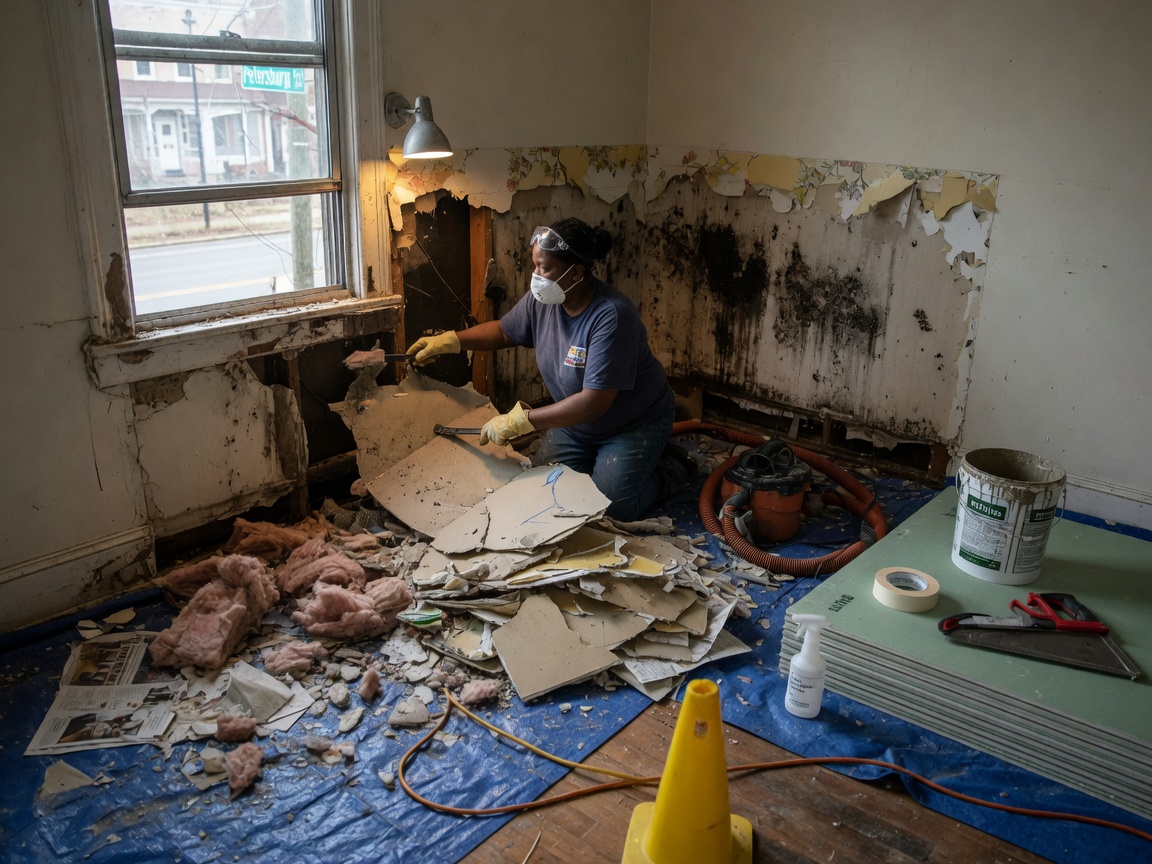
Water-damaged drywall in St. Petersburg homes must be cut back at least 12 to 18 inches beyond visible moisture to reach dry material and prevent hidden mold growth. This range accounts for the way moisture travels through gypsum in older concrete-block and frame houses common throughout the city and nearby Gulfport and Pinellas Park neighborhoods.
Assessing the Extent of Damage
Begin by locating the water source and documenting every affected wall with photos and moisture meter readings. In St. Petersburg, many homes built before 1970 have plaster-over-lath or early drywall that absorbs water differently than modern 1/2-inch sheets, so test both sides of the wall and behind baseboards. Check ceilings for sagging that signals trapped water above. Measure humidity in the room; levels above 60 percent indicate the need for dehumidification before any cutting begins. Note the type of insulation behind the drywall, because fiberglass batts that have wicked water must be removed entirely while closed-cell foam may only need drying. Record the distance from the floor to the highest moisture reading so the replacement cut line stays straight and level. This assessment prevents unnecessary demolition and helps decide whether the job stays within a single room or requires opening adjacent spaces.
Safety Precautions Before Cutting
Turn off power to the affected circuits at the breaker panel and verify with a non-contact voltage tester before touching any wall. Wear an N95 respirator, safety glasses, and gloves rated for construction debris because disturbed drywall releases silica dust and possible mold spores. Seal the work area with 6-mil plastic sheeting taped to the floor, ceiling, and door frames to keep dust from migrating into living spaces. In humid St. Petersburg conditions, run a HEPA air scrubber inside the containment zone to capture airborne particles. Place a drop cloth and shop vac with a fine filter nearby so every piece of removed drywall goes straight into heavy-duty bags rather than piling on the floor. Keep a first-aid kit and charged phone within reach in case a hidden nail or sharp edge causes injury.
Removing Water-Damaged Drywall
Score a straight line with a utility knife at the predetermined height, then use a drywall saw to cut along the line while supporting the piece so it does not fall and tear surrounding paper. Work from the top down so loose material does not drop into the cavity. Pry the section away with a flat bar, checking behind it for wiring, pipes, or ducts that could be nicked. Remove all wet insulation and discard it in sealed bags. Wipe the exposed studs with a disinfectant solution rated for porous surfaces and allow them to dry to under 15 percent moisture content before proceeding. In older St. Petersburg homes, watch for knob-and-tube wiring or cast-iron plumbing that may need protection during removal. Vacuum the cavity thoroughly once the material is out to eliminate dust that could later affect new drywall adhesion.
Replacing and Finishing Drywall
Install new 1/2-inch or 5/8-inch drywall matched to the existing thickness, securing it to studs with drywall screws spaced 12 inches on center. Apply fiberglass mesh tape over seams and cover with setting-type joint compound in thin coats, allowing each coat to dry fully in the local humidity. Sand between coats with 120- then 220-grit paper, wiping dust away after each pass. Prime the entire patch with a stain-blocking primer before painting to prevent water stains from bleeding through. When the repair borders tile or wainscoting, leave a 1/8-inch expansion gap at the bottom to accommodate future moisture movement common along the Gulf coast. For larger areas, consider professional Water Damage Restoration crews who already have containment and drying equipment staged in the Petersburg area.
When Professional Help Is Required
If water entered through roof leaks, windows, or king-tide flooding along St. Petersburg shorelines, hidden damage often extends into subfloors and cabinets that require specialized drying equipment. Homeowners should also call experts when the affected area exceeds 10 square feet, electrical wiring is involved, or black water from sewage or floodwater is present. Review the article on Groundwater and King Tide Flooding Risks Along St. Petersburg Shorelines for local patterns that frequently affect drywall behind baseboards. For storm-related claims, the guide Navigating Insurance Claims for Storm-Related Water Damage outlines documentation steps that speed approval. Best Standard Restoration operates 24 hours from 4604 49th Street N, Suite 1614, St. Petersburg, FL 33709 and can respond the same day to contain damage before it reaches neighboring rooms.