
2026-08-20 · Carlos Mendoza
Drying Crawl Spaces After Groundwater Seepage
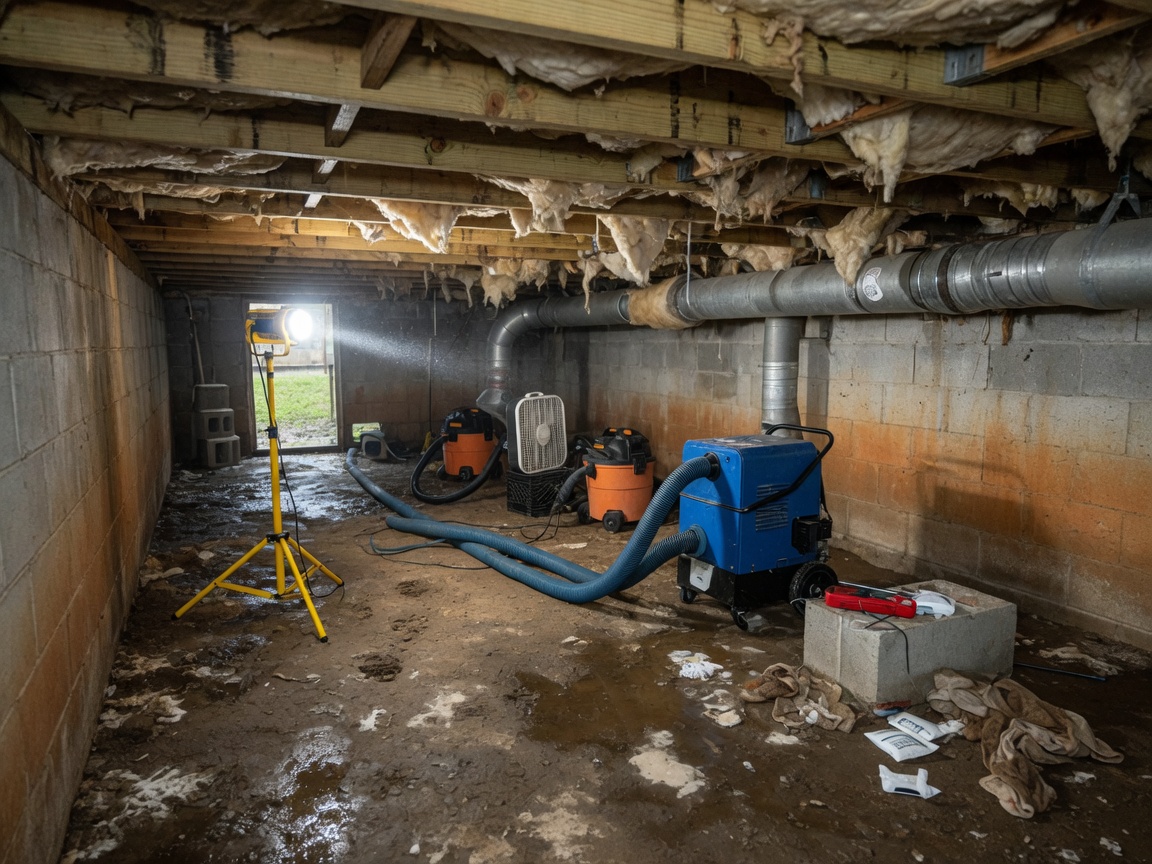
Drying crawl spaces after groundwater seepage in St. Petersburg homes typically takes 5 to 10 days when using industrial dehumidifiers, air movers, and moisture meters, though older mid-century homes with dirt floors may require additional time for full moisture removal.
Assessing Seepage Impact in Local Crawl Spaces
St. Petersburg sits in Pinellas County where the shallow water table and sandy soils allow groundwater to push through foundation cracks or vents during heavy summer rains. Many homes built between 1950 and 1970 feature vented crawl spaces with limited insulation, making them prone to standing water that saturates joists and subfloors. Begin by measuring moisture levels at multiple points with a pin meter; readings above 18 percent indicate active seepage that needs immediate attention. Document visible silt lines on foundation walls and check for soft spots in wooden supports before starting extraction. These steps reveal how far moisture has traveled and guide equipment placement to reach hidden pockets under insulation.
Equipment Setup for Thorough Drying
Place commercial dehumidifiers rated for at least 70 pints per day in the crawl space along with high-velocity air movers directed across wet surfaces. In St. Petersburg humidity levels that often exceed 80 percent, combine refrigerant dehumidifiers with air scrubbers to pull moisture from both air and soil. Run equipment continuously and check readings every 24 hours until levels drop below 12 percent on wood and 10 percent on concrete. For homes near Gulfport or Pinellas Park with older plumbing, add targeted fans under HVAC ducts to prevent condensation from re-wetting dried areas. This setup prevents the rapid mold growth that follows when moisture lingers beyond three days.
Addressing Mold Risks After Seepage
Groundwater often carries organic matter that fuels mold on joists and insulation within 48 hours in the local climate. Remove and dispose of any saturated fiberglass batts, then treat exposed wood with an antimicrobial solution approved for crawl spaces. Install a vapor barrier over the soil if one is missing or damaged, sealing seams with mastic to block future moisture migration. Homes in Kenneth City and Largo frequently need this upgrade because their original barriers have degraded after decades of exposure. Monitor for musty odors during the drying process and retest surfaces before reinstalling insulation to confirm the space is dry.
Long-Term Prevention Steps
Improve grading around the foundation so water flows away from the house, and extend downspouts at least six feet from the structure. Add or enlarge crawl space vents on opposite walls to increase airflow during dry seasons. In neighborhoods with older homes, consider a sealed crawl space system with a dehumidifier tied into the HVAC if seepage repeats after storms. These changes reduce the frequency of water damage restoration calls and protect against issues common in mid-century St. Petersburg construction. Review common water damage sources in mid-century st petersburg homes to identify other vulnerabilities before the next rainy season.
Knowing When Professional Help Is Needed
If moisture readings remain elevated after a week or black mold appears on multiple surfaces, contact a team experienced in structural drying services. Persistent seepage may require French drains or sump pump installation that exceeds basic drying work. Local operators familiar with Pinellas County soil conditions can also coordinate with insurance documentation to support claims. See how to spot hidden water damage after tropical storms for additional signs that warrant a full inspection.