
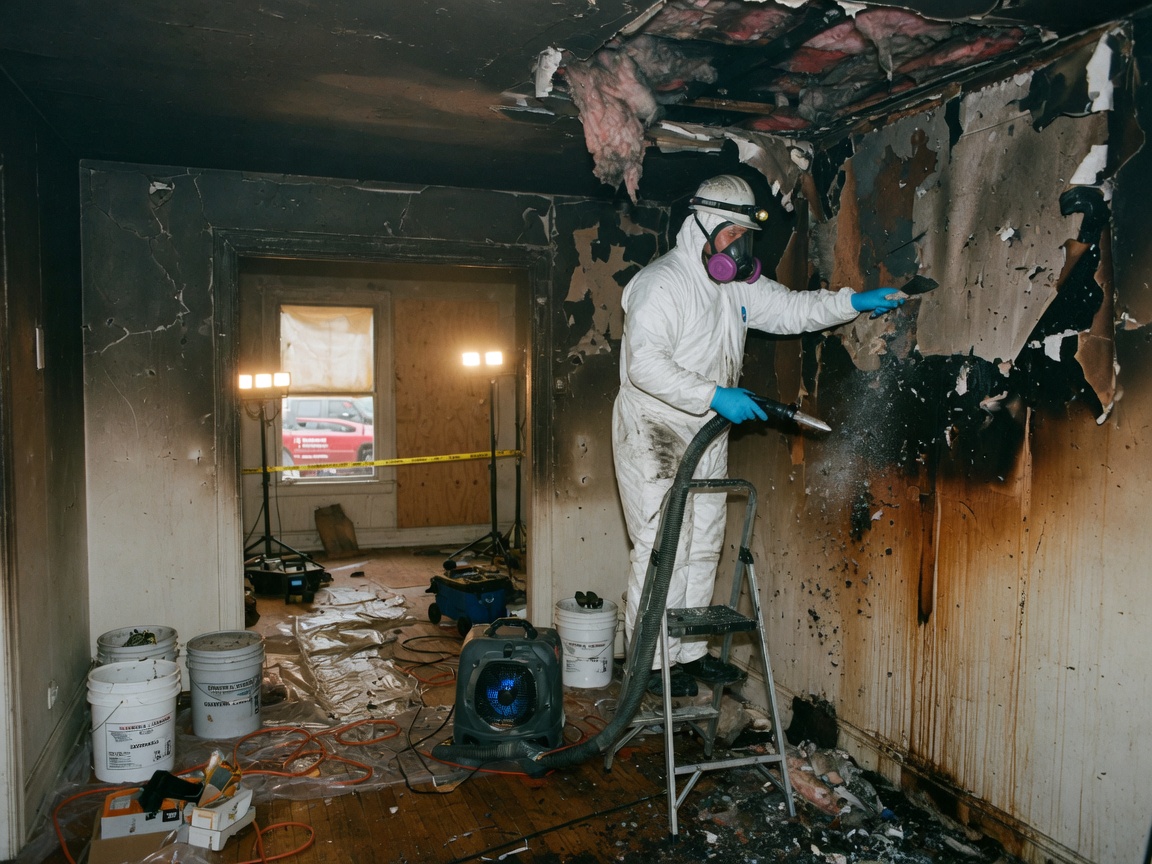
St. Petersburg homes built before 1970 often feature plaster walls and lath that trap soot particles deeply after a fire. High humidity in Pinellas County keeps residue moist longer, allowing it to etch surfaces if not cleaned within the first 48 hours. Crews start by mapping pH levels on every affected surface because alkaline soot from synthetic materials reacts differently than acidic smoke from wood. Skipping this step leads to recurring stains weeks later when summer rains raise indoor moisture.
Firefighting water in older Tyrone and downtown properties frequently pools under raised floors or in stucco cavities. The combination of salt air and standing water accelerates corrosion on copper wiring and HVAC coils. Restoration teams isolate these voids with moisture meters before any drying begins, otherwise hidden mold colonies appear once humidity climbs above 70 percent. Documenting every layer removed protects homeowners when insurance adjusters question the scope.
Contents cleaning must separate porous items like books and upholstery from non-porous metals early. Smoke odor molecules bind to fabric fibers in air-conditioned homes where the system recirculates air for months after the event. Specialized filtration units run continuously during the process to prevent re-soiling cleaned surfaces. Final clearance testing checks for both visible residue and lingering VOCs before any reconstruction starts.
Technician insight
In St. Petersburg the high year-round humidity makes soot bond tightly to plaster and drywall in pre-1970 homes around Old Northeast, so crews must neutralize surfaces within 48 hours or the residue etches permanently once summer moisture returns.
Kitchen Fire in Tyrone Neighborhood
A cooking fire spread smoke through a 1960s single-story home. Crews found standing water under the subfloor and alkaline soot etched into kitchen cabinets. They isolated the HVAC, extracted hidden moisture, and cleaned all surfaces before returning contents two weeks later.
Fire Damage Restoration Services We Offer
✓Soot Removal Services
Removes fine carbon particles from walls, ceilings, and HVAC systems using pH-neutral cleaners matched to the smoke type common in Pinellas County fires.
✓Smoke Odor Elimination
Neutralizes embedded odors in drywall, insulation, and ductwork with hydroxyl generators and thermal fogging suited to the region's persistent humidity.
✓Structural Fire Cleaning
Cleans charred framing, subfloors, and stucco exteriors while documenting hidden water pockets left by firefighters in older St. Petersburg homes.
✓Contents Pack-Out and Cleaning
Safely removes, cleans, and stores furniture and personal items before on-site reconstruction begins in neighborhoods like Old Northeast.
✓Fire Damage Drying
Extracts moisture introduced during firefighting using commercial dehumidifiers calibrated for Pinellas County's high ambient humidity levels.
Fire Damage Restoration Cost in Petersburg, FL
| Service | Typical Range | What Affects It |
|---|---|---|
| Initial Assessment | Free | Includes moisture mapping and soot testing. |
| Soot Removal Per Room | $400–$900 | Varies with surface porosity and smoke density. |
| Full Home Odor Treatment | $800–$2,200 | Depends on HVAC involvement and square footage. |
| Structural Drying | $600–$1,800 | Influenced by water volume and local humidity. |
Ranges are typical for Petersburg, FL and confirmed with an exact written quote before any work starts.
How it works
- 1
Emergency Assessment
Technicians arrive within hours, document visible damage, test surfaces for soot pH, and locate hidden water in cavities typical of St. Petersburg construction.
- 2
Containment And Safety
Isolate affected rooms, protect unaffected areas, and set up negative air to prevent soot migration through the home's shared HVAC.
- 3
Cleaning And Deodorization
Remove residue, treat odors, and dry structural elements using equipment sized for local humidity and salt-air conditions.
- 4
Reconstruction And Clearance
Repair or replace damaged materials, run final air quality checks, and return contents once testing confirms no lingering contaminants.
Pricing
Upfront quotes after on-site inspection; final cost depends on square footage, smoke type, and hidden water extent.