
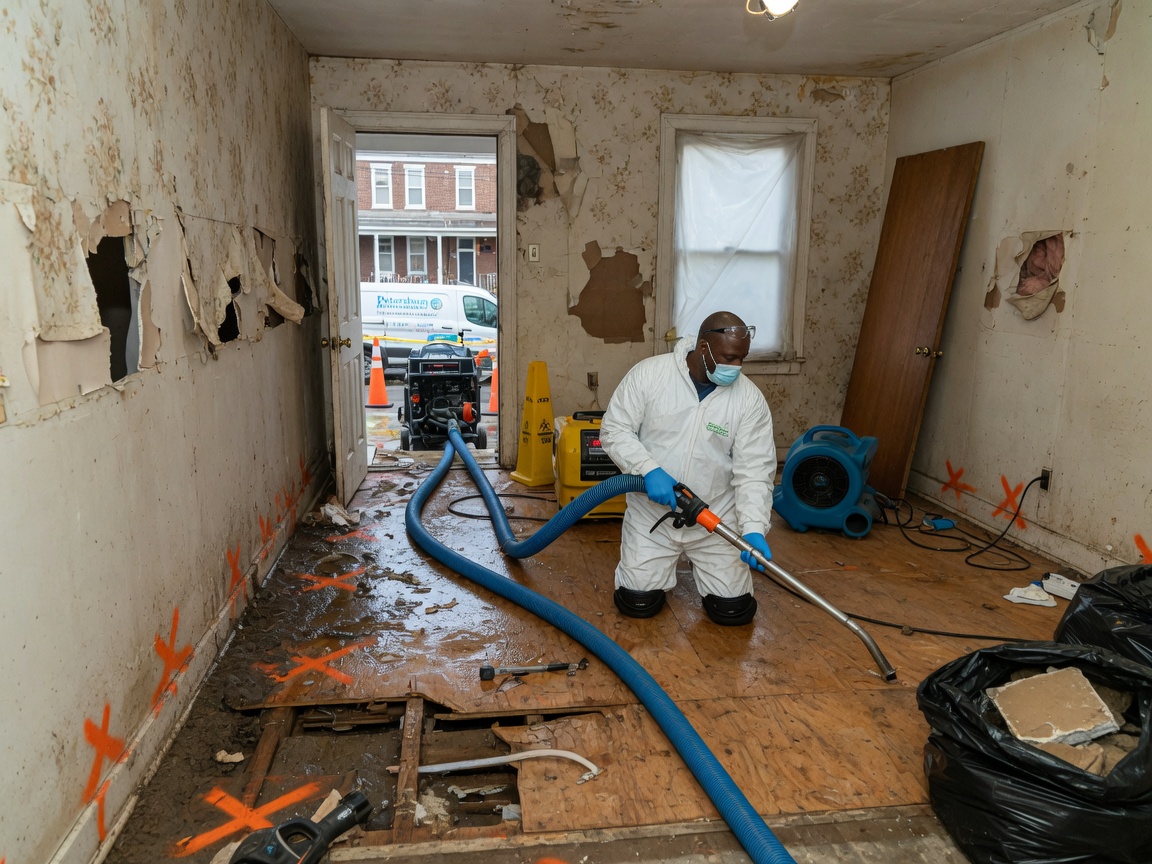
St. Petersburg’s older bungalows and mid-century concrete-block homes in neighborhoods like Tyrone, Kenwood and downtown often have plaster or lath walls that trap moisture after roof leaks or appliance failures. Once water migrates behind baseboards or into slab edges, hidden mold colonies can form within 48 hours because of the area’s persistent high humidity. Restoration crews must pull baseboards, create negative-pressure drying chambers and monitor moisture meters daily until readings drop below 12 percent on wood and 0.5 percent on concrete.
Hurricane season brings storm surge and wind-driven rain that can flood crawl spaces in South St. Pete and flood-prone pockets near Coffee Pot Bayou. When brackish water enters these spaces, salts remain after evaporation and corrode copper pipes and electrical boxes. Technicians flush with clean water, apply corrosion inhibitors and replace any compromised wiring before drywall is reinstalled to meet Pinellas County building codes.
Commercial properties along 4th Street and near the hospitals see frequent slab leaks from aging cast-iron drains. These jobs require floor saw-cutting, sub-slab drying with injected air and new vapor barriers before tile replacement. Owners who skip the drying step often face recurring tile tenting within a year because residual moisture pushes through grout lines.
Every job starts with a written scope that lists affected materials, equipment placement and daily moisture logs so homeowners can verify progress and insurance carriers see documented drying.
Technician insight
In St. Petersburg the thing that catches most people out with property damage restoration is how quickly moisture travels through the lime-based plaster in 1950s and 1960s homes along Central Avenue and in Kenwood. Homeowners often stop once the carpet feels dry, but the salts left from even a small roof leak will keep pulling humidity out of the air and restart mold growth behind the walls.
Slab Leak in Tyrone Square Home
A kitchen slab leak in a 1962 Tyrone bungalow sent water under the tile and into the living-room subfloor. Infrared imaging showed moisture extending eight feet past the visible wet area. Crews cut the slab, dried the gravel bed with injected air for five days, replaced the vapor barrier and reinstalled matching tile so the floor remained level.
Property Damage Restoration Services We Offer
✓Water Extraction and Removal
Truck-mounted extraction removes standing water from carpets, hardwood and tile in St. Petersburg homes before secondary damage sets in.
✓Structural Drying and Dehumidification
Industrial air movers and low-grain dehumidifiers bring moisture levels back to normal in Pinellas County concrete and wood structures.
✓Mold Remediation After Water Damage
Containment, HEPA filtration and antimicrobial treatment address mold growth triggered by leaks in older St. Pete housing stock.
✓Content Cleaning and Pack-Out
Salvageable furniture, documents and belongings are inventoried, cleaned and stored until the property is restored.
✓Flooring and Drywall Replacement
Removal of saturated subfloors, drywall and insulation followed by code-compliant reinstallation in affected rooms.
Property Damage Restoration Cost in Petersburg, FL
| Service | Typical Range | What Affects It |
|---|---|---|
| Water extraction and initial drying | $800–$2,200 | Varies with volume of water and number of rooms |
| Full structural drying package | $1,200–$3,500 | Includes equipment rental and daily monitoring |
| Mold remediation after water event | $1,500–$4,000 | Depends on containment size and material removal |
| Flooring and drywall replacement | $2.50–$6.00 per sq ft | Material and labor; higher for specialty finishes |
Ranges are typical for Petersburg, FL and confirmed with an exact written quote before any work starts.
How it works
- 1
Emergency Assessment
Technician arrives within hours, maps moisture with meters and infrared cameras, and creates a written scope for the property owner.
- 2
Water Removal
Standing water is extracted and any salvageable contents are moved to a secure location for cleaning.
- 3
Drying And Monitoring
Equipment runs until daily moisture readings meet industry standards; logs are shared with the homeowner each visit.
- 4
Repairs And Restoration
Damaged materials are replaced, surfaces are treated, and the space is returned to pre-loss condition.
Pricing
Upfront written quotes after on-site inspection; final price depends on affected square footage, material types and drying duration.