
2026-08-20 · Carlos Mendoza
Ventilation Strategies After Minor Appliance Leaks
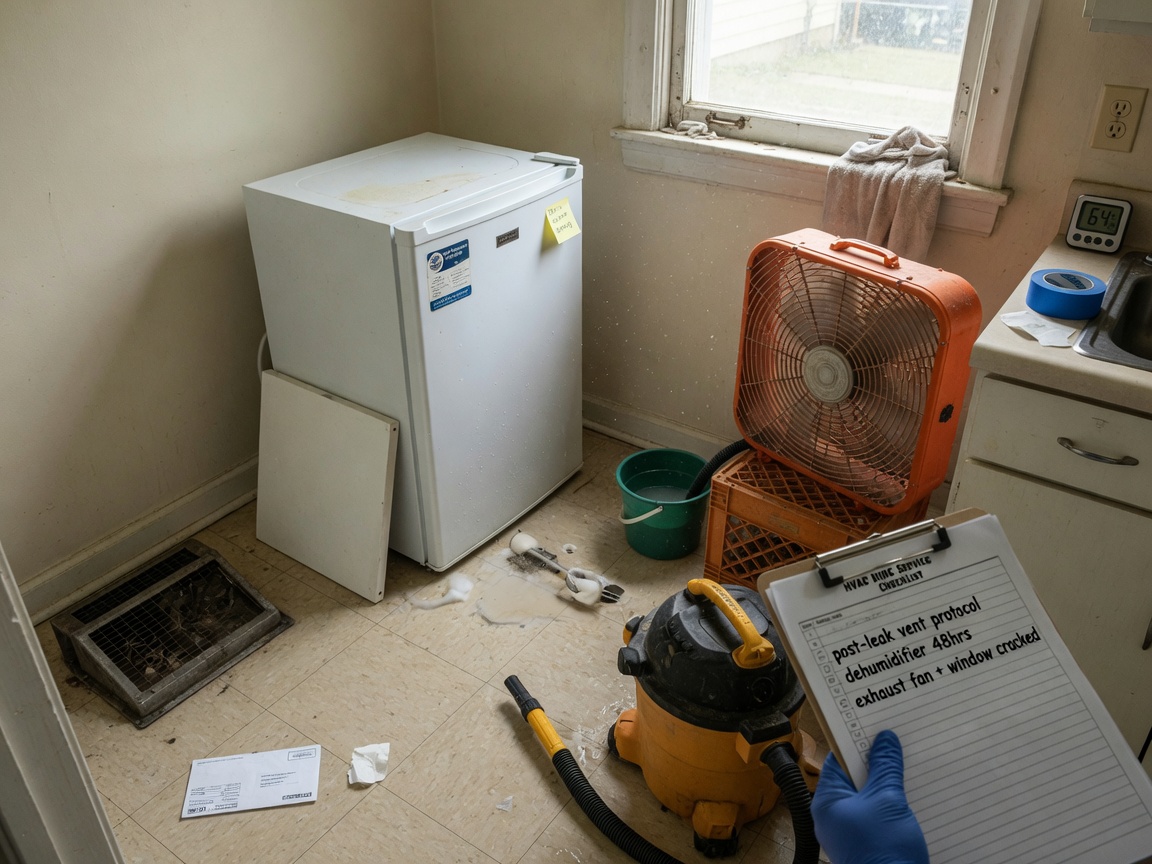
After a minor appliance leak in a St. Petersburg home, direct exhaust fans at the affected area and maintain indoor humidity below 50 percent for 24 to 48 hours while opening windows on dry days to promote cross ventilation. This approach removes excess moisture before it migrates into subfloors or wall cavities common in local 1960s and 1970s construction. Homeowners along 49th Street N and nearby Gulfport neighborhoods often see leaks from 40-gallon water heaters or dishwashers spread quickly due to slab foundations and limited crawl space airflow.
Assessing Moisture Spread in Local Homes
St. Petersburg properties built before 1980 frequently feature tile-over-slab floors that trap moisture after washing machine or refrigerator leaks. Begin by checking baseboards and adjacent rooms for dampness using a moisture meter, paying special attention to areas near the kitchen or laundry room. High ambient humidity along the Pinellas County coast means even small leaks can raise room humidity above 60 percent within hours. Document readings in multiple spots and note any musty odors that indicate hidden saturation. This step reveals whether simple ventilation will suffice or if deeper drying is required. Residents in Pinellas Park and Kenneth City report similar patterns where leaks travel under cabinets before visible signs appear.
Establishing Effective Airflow Patterns
Position box fans to pull air out through windows while directing fresh air inward from opposite sides of the room to create steady cross ventilation. Run at least two fans on high for the first 12 hours, then reduce speed once surface moisture readings drop below 15 percent. In older St. Petersburg homes with single-pane windows, avoid pulling in outdoor air during afternoon thunderstorms that spike humidity. Combine this with ceiling fans set to counterclockwise to keep air moving across wet surfaces. Avoid sealing the space completely, as trapped moisture leads to mold growth on drywall behind appliances. Structural drying services often refine these patterns on site when readings remain elevated after 48 hours.
Monitoring Humidity and Adjusting Over Time
Check a digital hygrometer every four hours during the first day and record changes to confirm levels stay under 50 percent. If readings climb again after sunset due to typical Gulf moisture, increase exhaust fan runtime or add a portable dehumidifier rated for at least 50 pints per day. In neighborhoods like Largo and Seminole, where many homes sit on fill dirt, monitor lower cabinets and toe-kicks for lingering dampness that ventilation alone may not reach. Continue the process until all surfaces test dry for two consecutive readings. This disciplined tracking prevents secondary issues that later require water damage restoration.
Recognizing When Professional Help Is Needed
If moisture persists beyond 72 hours or spreads into carpet padding and subfloor, contact technicians familiar with St. Petersburg conditions. Older plumbing in homes near downtown often leaks behind walls where homeowner fans cannot reach. Persistent readings above 55 percent humidity after ventilation attempts signal the need for commercial equipment. Review how to spot hidden water damage after tropical storms for additional signs that a minor leak has become structural. Best Standard Restoration at 4604 49th Street N, Suite 1614, St. Petersburg, FL 33709 remains available 24 hours daily to assess and complete drying when ventilation strategies fall short.