
2026-08-20 · Carlos Mendoza
Checking for Water Damage in Attics After Roof Leaks
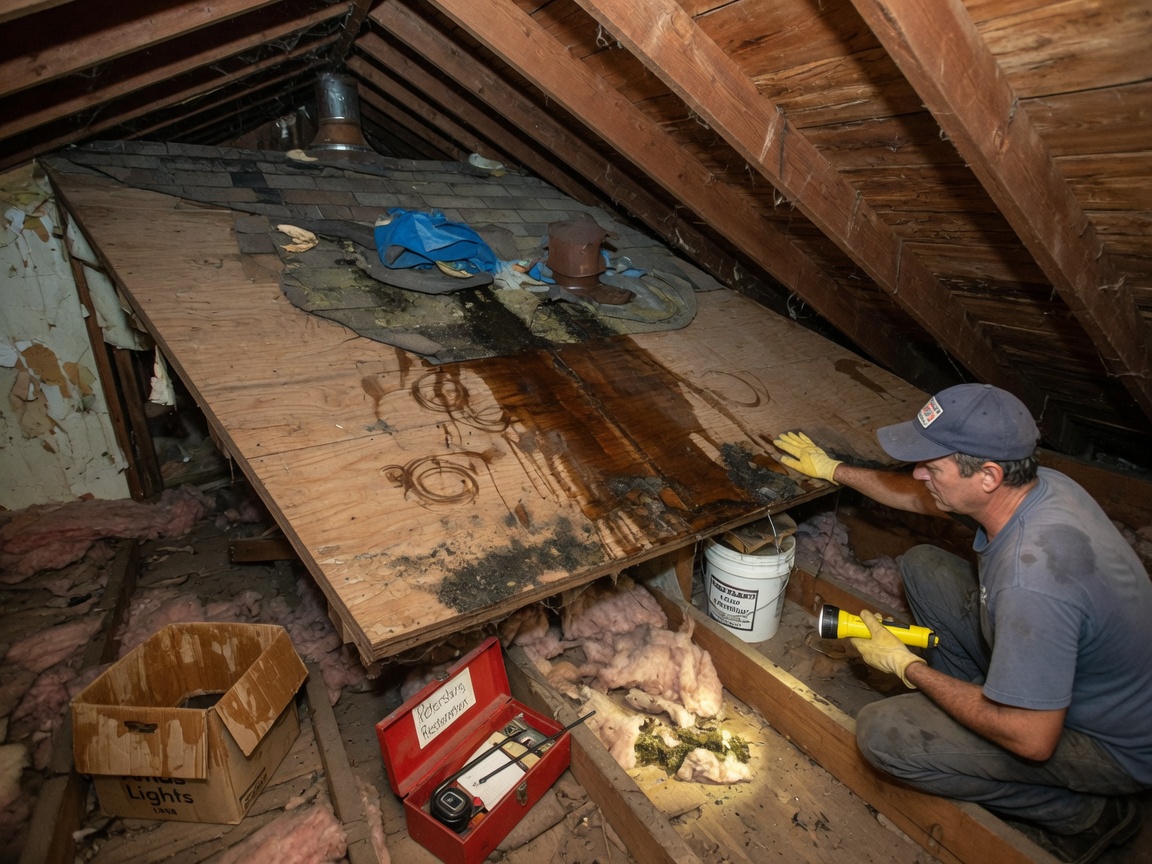
Check attics for water damage within 24 to 48 hours after noticing roof leaks to prevent saturation of insulation and ceiling drywall in St. Petersburg homes. Pinellas County properties built before 1980 often feature older asphalt shingles or modified bitumen roofs that crack under repeated afternoon thunderstorms and hurricane season winds. Early detection limits mold growth in the high-humidity environment and keeps repairs focused on the attic rather than full ceiling replacement.
Spotting Visible Signs in Attics
St. Petersburg attics commonly hold blown-in cellulose or fiberglass batts that darken or mat down when water enters through roof penetrations around vents and skylights. Look for dark streaks along rafters, especially where they meet the roof deck near the ridge. Water stains on plywood sheathing appear as brownish rings that spread outward from nail holes or flashing seams. In neighborhoods like Gulfport and Kenneth City, many single-story ranch homes have low-pitch roofs that channel water into valleys, creating concentrated drips over bedrooms. Discolored or sagging insulation near electrical boxes signals ongoing moisture that can corrode wiring. Check for white powdery residue on wood members, which indicates mineral deposits left after repeated wetting and drying cycles typical after summer storms. These signs appear faster in homes without ridge vents, where trapped humidity prolongs drying times.
Local Roofing and Climate Factors
St. Petersburg’s subtropical climate brings 50-plus inches of annual rainfall concentrated between June and November, stressing roof flashings around chimneys and plumbing stacks. Older homes in Pinellas Park and Largo often have 20- to 30-year-old shingles that lose granules and develop cracks at the seams. Afternoon thunderstorms deliver short, intense downpours that overwhelm gutters and send water under eaves into attic spaces. Salt air from the Gulf accelerates corrosion of metal drip edges and valley flashings, creating entry points that homeowners miss until ceiling spots appear. Terrain in low-lying sections near Safety Harbor allows poor drainage around foundations, but attic issues stem mainly from roof age rather than rising groundwater. These conditions mean leaks frequently start small at pipe boots and expand during the next heavy rain event.
Step-by-Step Attic Inspection Process
Begin by turning off attic lights and using a bright flashlight to scan rafters from the access hatch. Walk only on ceiling joists to avoid breaking through drywall below. Photograph any dark areas on sheathing or insulation for later comparison. Use a moisture meter on wood members; readings above 15 percent indicate active or recent wetting. Probe suspect insulation with gloved hands to feel for dampness, then bag and remove small sections for disposal if mold is visible. Check soffit and ridge vents for blockages that trap moisture after leaks. In Seminole and Clearwater homes with cathedral ceilings, inspect from the exterior roofline first to correlate interior stains with specific shingle rows. Document every finding with dates and locations before contacting restoration services.
When Professional Help Becomes Necessary
If moisture meter readings exceed 20 percent or visible mold covers more than 10 square feet, stop the inspection and call for water damage restoration. St. Petersburg residents can reach Best Standard Restoration at 4604 49th Street N, Suite 1614, St. Petersburg, FL 33709, available Mon–Sun 24hrs for Emergency Disaster Restoration Services. Technicians extract trapped water from insulation and apply drying equipment sized for attic volumes without disturbing electrical systems. For storm-related leaks, review the guide on How to Spot Hidden Water Damage After Tropical Storms to understand documentation needed for insurance. Delaying professional drying in Pinellas County’s humidity allows hidden mold to colonize behind drywall within 72 hours.
Preventing Recurrence in Pinellas County Homes
Schedule roof inspections each spring before hurricane season to replace cracked pipe boots and reseal valleys on St. Petersburg homes. Upgrade to impact-rated shingles during re-roofing projects to reduce wind-driven rain entry. Install additional ridge venting in older attics to lower baseline humidity and speed drying after minor leaks. Keep gutters cleared of oak leaves common in Gulfport yards so water flows away from eaves. After any roof work, recheck attic insulation moisture levels within one week. These steps reduce the frequency of attic water damage calls in neighborhoods throughout the county.